
The Future of Housing? Nvidia and PulteGroup Are Testing AI Data Centers in Residential Communities
Technology and real estate are colliding again… and this time, it may literally show up in your backyard.
A recent article from Realtor.com revealed that Nvidia, PulteGroup, and startup Span are exploring a new concept that could change how we think about homes, neighborhoods, and infrastructure in the future.
The concept? Installing small AI powered “micro data centers” directly onto residential homes and communities.
At first glance, it sounds like something straight out of a sci fi movie. But the reasoning behind it is actually tied to a very real problem happening right now across the country…
AI needs an enormous amount of power. As artificial intelligence continues to grow, traditional data centers are consuming massive amounts of electricity and land. In many markets, utility companies are struggling to keep up with demand. Instead of relying solely on giant centralized facilities, companies are now testing a distributed model using smaller nodes attached to homes and buildings.
According to the article, these systems would allow neighborhoods to contribute computing power while potentially generating benefits for homeowners and builders.
So what does this mean for real estate?
Honestly… we don’t fully know yet. But it raises some very interesting questions. Could future homes become part of the digital infrastructure economy?
Will buyers eventually ask:
• How energy efficient is this neighborhood?
• Does this community support AI infrastructure?
• Are homeowners compensated?
• Will these systems affect resale value?
• Could this lower utility costs?
And of course, there are concerns too.
Many homeowners already push back against large data centers because of noise, environmental concerns, energy consumption, and aesthetics. Even though these “micro nodes” are much smaller, consumers will likely still have questions about:
• privacy
• security
• maintenance
• HOA restrictions
• insurance implications
• property values
• long term neighborhood impact
Personally, I think this is less about whether THIS exact model succeeds and more about what it signals…
Homes are becoming smarter, more connected, and increasingly tied to larger technology ecosystems.
Builders are no longer just constructing houses. They’re building integrated lifestyle infrastructure.
And as AI continues to evolve, the housing industry will likely have to evolve with it. Whether this becomes mainstream or not, one thing is clear… the intersection of technology and real estate is only getting bigger and conversations like this are exactly why staying informed matters in today’s market.
PROS & CONS
AI DATA CENTERS IN RESIDENTIAL COMMUNITIES
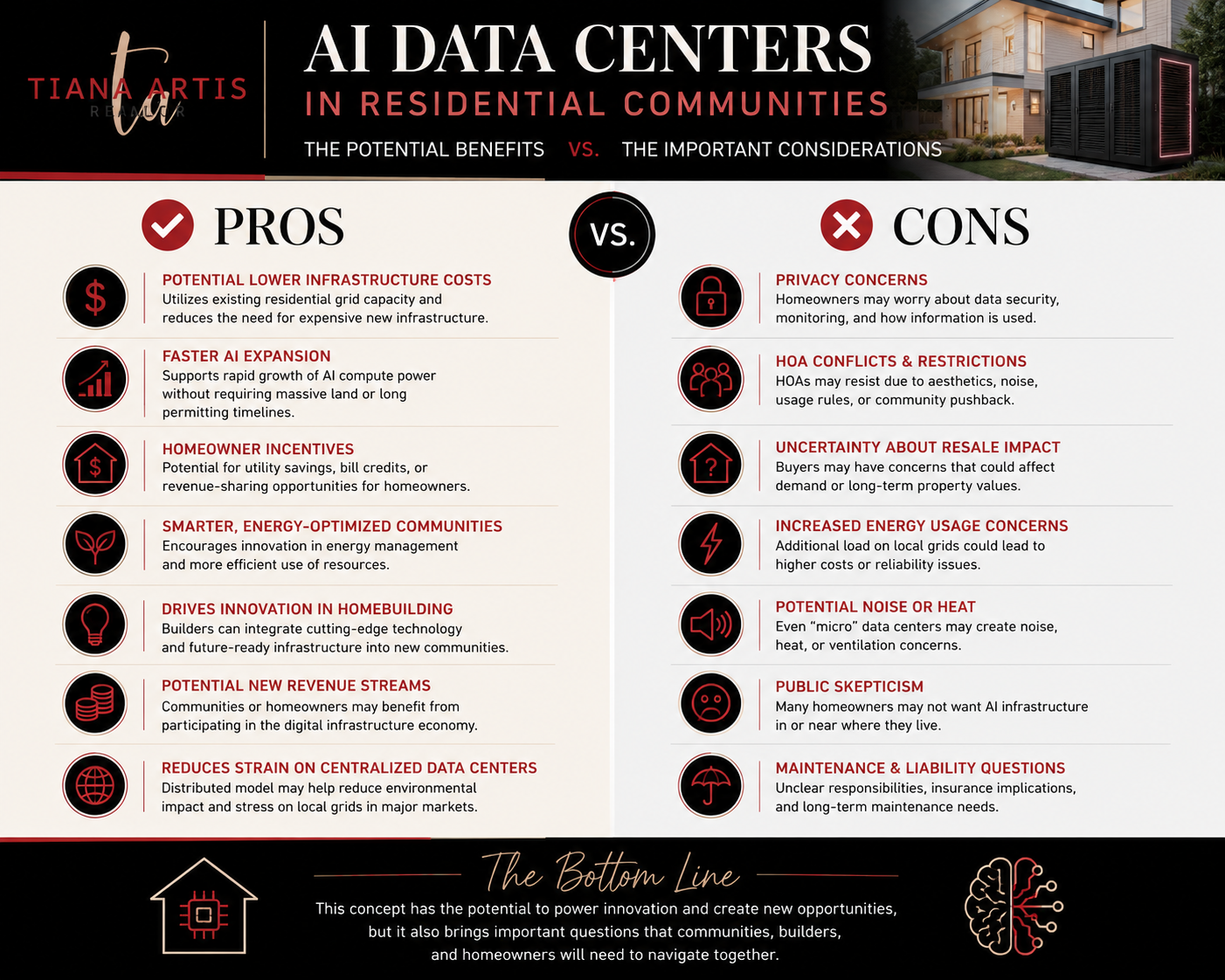
Bottom Line:
The future of housing may include more technology integration than we ever imagined… or wanted. What are your thoughts on this?